
How Long Does Fence Installation Take? Key Insights Explained
Key Highlights
Most fence installation jobs take 1 to 3 days on-site for a standard residential project.
The full installation process can take longer because permits, approvals, and scheduling happen before the crew starts.
Installation time depends on fence length, material, gates, soil, and weather in Michigan.
A professional contractor usually finishes faster than DIY fence building.
Vinyl and chain link often install faster than some wood or custom fences.
Good planning helps reduce delays and keeps the project timeline clear.
Introduction
A fence installation looks simple from the outside, but there is more to the installation process than setting posts and attaching panels. You may need permits, HOA approval, utility marking, material preparation, and the right weather window. That is why good planning matters from the start. If you know what happens before, during, and after installation day, you can set realistic expectations and avoid stress while your new fence moves from idea to finished project.
Average Fence Installation Timeline in Michigan
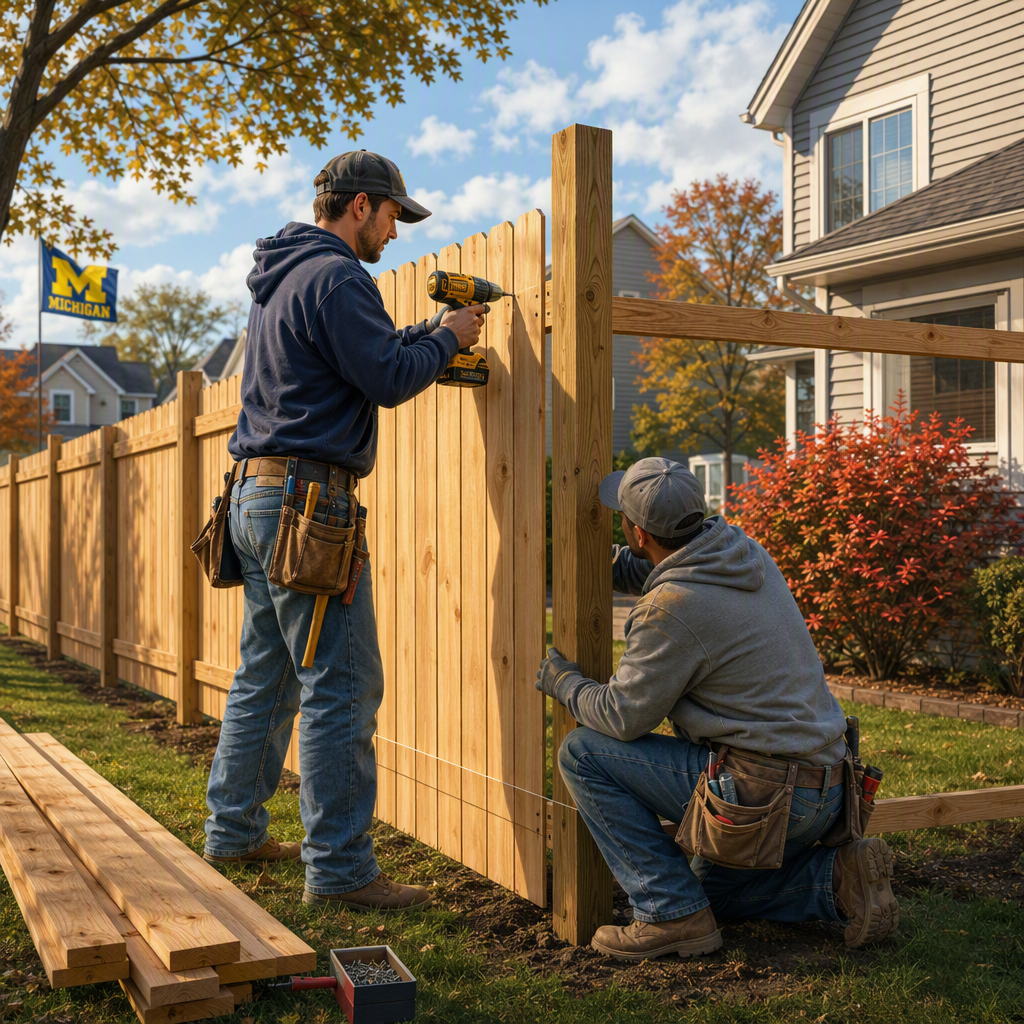
For most homes, fence installation on-site takes about 1 to 3 days. That is the average installation time for a standard backyard project when a trained crew handles the work. Many homeowners ask how many business days they should expect, and the short answer is usually just a few once the job is ready to start.
Still, the full project can stretch beyond the actual installation day. A fence contractor may need time for measuring, permits, approvals, production, and scheduling. In Michigan, that full timeline often matters more than the labor itself. The next sections break down each part so you know what affects the final schedule.
On-Site Labor: 1–3 Days for Most Residential Fences
In many residential fence installations, the crew can complete the visible building work in 1 to 3 days. That includes setting the layout, placing posts, and installing panels or stretched material. If you are asking how many days a standard backyard fence takes, this is the most common answer for a prepared site.
An 80 ft project may fall on the shorter end of the range, especially if the yard is open and the type of fence is straightforward. A longer fence length, extra gates, or uneven ground can push the schedule out. The exact installation process depends on site conditions, crew size, and material details.
Fence Length / Scope
Typical On-Site Installation Day Range
Small open yard
About 1 day
Standard backyard
About 1–3 days
80 ft fence
Often 1–2 days
Larger or more complex layout
Up to 3 days or more
Complete Project Window: Permitting, Manufacturing, and Scheduling
The full fence installation timeline is wider than the building phase. While the crew may only be on your property for a few days, the total project window can run 1 to 4 weeks. That gives time for planning, permits, material preparation, and scheduling the install crew.
A good contractor explains these steps early so you know how much time to set aside. Evelyn Fence Company states that most installations are completed in 1 to 3 days on average, but the complete installation process depends on the fence type and project size.
Estimate and site review usually happen first.
Permits and approvals can add days or weeks.
Manufacturing, delivery, and crew scheduling complete the pre-install phase.
Step-by-Step Fence Installation Process
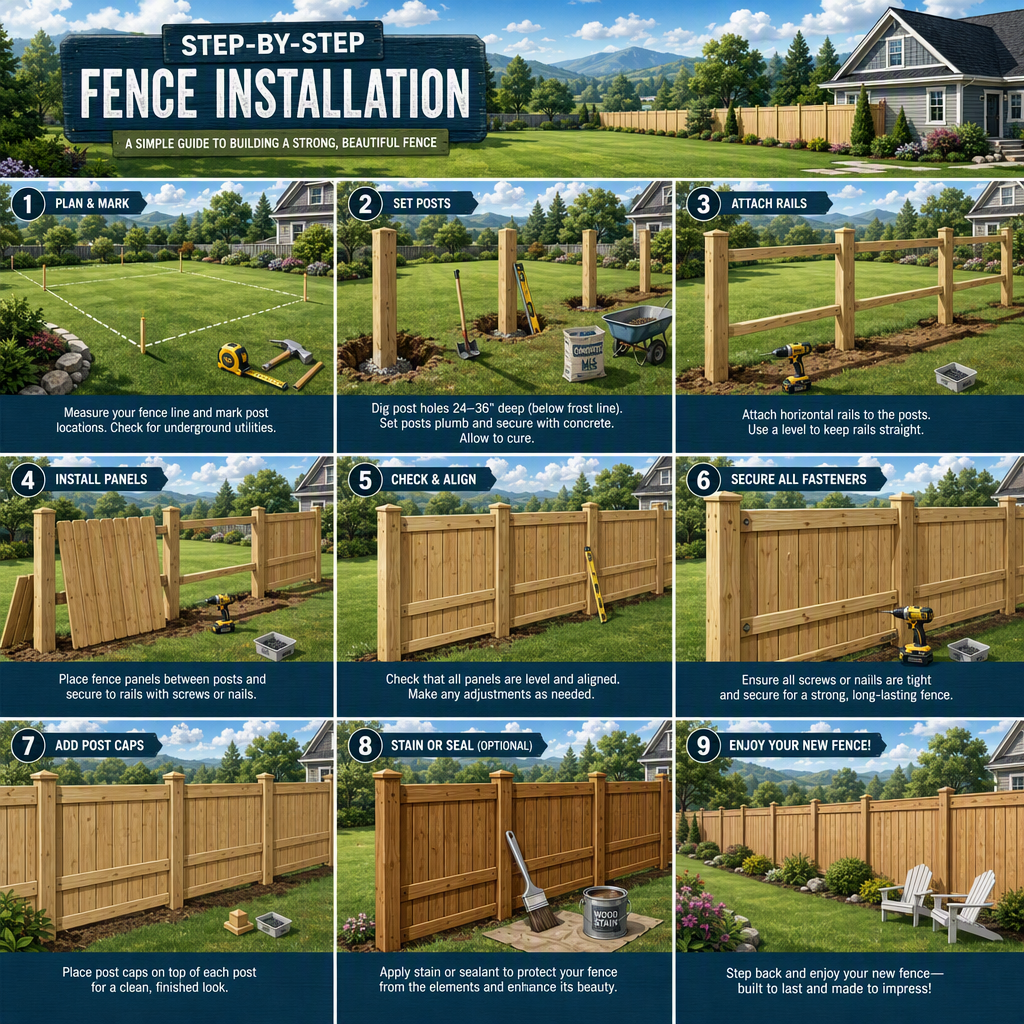
post-work,Every installation process follows a sequence. When you understand each stage, the timing makes more sense. The first step is not digging. It is planning the project correctly, confirming the layout, and making sure materials and approvals are lined up before the crew arrives.
After that, fence construction moves in order from approvals to production, then site prep, post work, and final assembly on installation day. This staged approach helps reduce surprises. Below is a simple look at the key steps and how each one can affect your schedule.
Free Estimate & Consultation
The first call usually starts everything. You talk with a fence contractor about your goals, property layout, budget, and basic timing. This is where your fence ideas begin to turn into a real plan. A professional estimate helps set early expectations before any work is scheduled.
During the visit, the team reviews the scope of the project and notes the type of fence, likely placement, and any visible challenges. This part matters because the full installation process depends on details such as yard size, terrain, access, and the number of gates.
For Evelyn Fence Company, the process begins with a no-obligation free estimate. After that, the team finalizes the order and handles approvals. If you want to learn more about the company, add an internal link here:About Evelyn Fence Company.
Permits, HOA Approval, and Utility Marking
Before digging starts, many projects need permits, neighborhood review, or both. Your city’s rules may limit height, placement, or fence style. In some areas, HOA approval is also part of the process. These steps are common reasons for installation delays, especially when paperwork takes longer than expected.
Just as important, utility companies must mark public lines before work begins. Private lines may need separate attention too. This safety step protects gas, electric, and other services and should never be skipped.
Check the city’s rules for fence location and height.
Confirm whether your HOA needs approval before installation.
Schedule utility marking so crews can dig safely and stay on schedule.
In-House Fence Manufacturing Lead Time
Material preparation can change the timeline in a big way. Some jobs move quickly because products are ready. Others take longer because custom fences need more prep. This is one reason two projects with similar yard sizes can have different completion dates.
Evelyn Fence Company has a key advantage here. Their fence manufacturing is done in-house to exact specifications. That gives better quality control and helps the team manage lead time more directly than companies that rely only on outside suppliers.
Even so, the installation process still depends on the fence style, order details, and scheduling. Cedar, vinyl, aluminum, chain link, agricultural, and commercial fencing may each follow a slightly different path. If you are comparing options, add an internal link here:Vinyl Fencing Options.
Factors Affecting Fence Installation Time
No two jobs follow the exact same schedule. Installation time changes based on the material type, yard layout, number of gates, and how easy the property is to work on. A simple run on flat ground moves faster than a large project with slopes, roots, or access issues.
Michigan conditions also matter. Soil conditions, seasonal frost, and weather can affect digging and post setting. The overall project scope shapes the pace from start to finish. The next two sections explain the biggest factors that can add or reduce time.
Fence Material—Cedar, Vinyl, Aluminum, Chain Link, Agricultural
Yes, fence material affects installation speed. A wood fence often takes about 2 to 4 days for an average backyard. Vinyl and chain link fence projects are often faster, usually around 1 to 2 days if the site is ready. More detailed metal or ornamental styles can take longer.
That happens because each material installs differently. Some systems use ready-made panels. Others need more fitting, fastening, or custom handling. Aluminum and chain link can move quickly on a clear site, while cedar may require more step-by-step assembly.
Vinyl fence installation time is often 1–2 days.
Wood fence installation time is often 2–4 days.
Chain link fence installation time is often 1–2 days.
If quick installation is your goal, vinyl and chain link are often strong options.
Weather, Project Scope, and Site Terrain
In Michigan, weather can change the schedule fast. Rain, snow, extreme cold, or very hot days can slow digging, post work, and crew efficiency. These are common causes of installation delays, especially when concrete and ground conditions are involved.
The project scope matters too. A longer fence, extra gates, decorative details, or a commercial layout requires more labor than a basic backyard run. More footage usually means more posts, more panels, and more time on site.
Then there is site terrain. Uneven ground, tree roots, rocky areas, and difficult access can make digging slower. Challenging soil conditions may require extra effort to reach the correct depth and keep posts stable. All of that can stretch the timeline, even with an experienced crew.
Conclusion
In conclusion, understanding the timeline for fence installation is essential for homeowners looking to enhance their properties. The process typically involves several stages, from obtaining permits and selecting materials to the actual installation, which usually takes 1–3 days on-site, depending on various factors. Weather conditions, the type of fence, and project size can all impact how long the entire project takes. It's crucial to collaborate with an experienced team like Evelyn Fence Company, which has been serving Michigan since 1927, to ensure a smooth installation process tailored to your needs. For a clearer picture and personalized guidance, visit our website to request a free estimate today!
Frequently Asked Questions
How Long Does Fence Installation Usually Take for a Standard Backyard?
For a standard backyard, fence installation usually takes 1 to 3 business days on-site when a professional crew handles the fence building. The exact installation time depends on fence length, material, gates, and site conditions. The full project may take longer if permits or manufacturing are needed first.
Does Fence Material Impact Installation Time?
Yes, fence material can change the installation time. Vinyl and chain link often install in about 1 to 2 days on a ready site, while cedar or other wood styles may take 2 to 4 days. Custom designs and more detailed systems can extend the schedule further.
Can Weather Affect the Fence Installation Timeline in Michigan?
Yes, weather can affect the fence installation timeline in Michigan. Rain, snow, frozen ground, and temperature extremes can slow digging, post setting, and the overall installation process. A larger project scope can make weather-related delays more noticeable because crews need more working time to finish the job.
How long does it take to install a standard backyard fence?
Typically, installing a standard backyard fence takes about 1 to 3 days. This timeframe can vary based on factors such as material choice, site conditions, and the size of your yard. Planning for permits and any approvals may extend the overall project duration.
Does weather affect fence installation timelines in Michigan?
Yes, weather plays a significant role in fence installation timelines in Michigan. Rain, snow, or extreme temperatures can delay work schedules and affect material handling. It's essential to consider seasonal conditions when planning your fence project to ensure timely completion.
Is professional installation faster than DIY?
Yes, professional installation typically offers faster completion than DIY projects. Experts have the necessary tools and experience to navigate challenges efficiently, reducing delays. Homeowners may face unforeseen issues or lack speed, prolonging the project timeline compared to hiring trained professionals.
