
What Is a Fence? Types, Purposes and Key Components Explained
Key Highlights?
A fence is a built barrier that helps define space, protect yards, and improve curb appeal.
The different types of fences include privacy, security, boundary, decorative, and pool or garden options.
Common fence styles use wood, vinyl, aluminum, chain link, composite, or masonry materials.
Your right fence depends on privacy needs, budget, upkeep, and property lines.
Key parts include panels, pickets, posts, rails, gates, and hardware.
Good planning helps homeowners choose a fence that fits both function and appearance.
Introduction
If you have ever asked, What is a fence? The short answer is simple: it is a structure that surrounds or separates part of a property. For homeowners, fencing can add privacy, safety, security, and style. Still, choosing the right fence is not always easy. You need to think about purpose, materials, upkeep, and design. This guide explains the basics in clear terms so you can understand your options and make a smart decision.
What Is a Fence? Types, Purposes, and Key Components
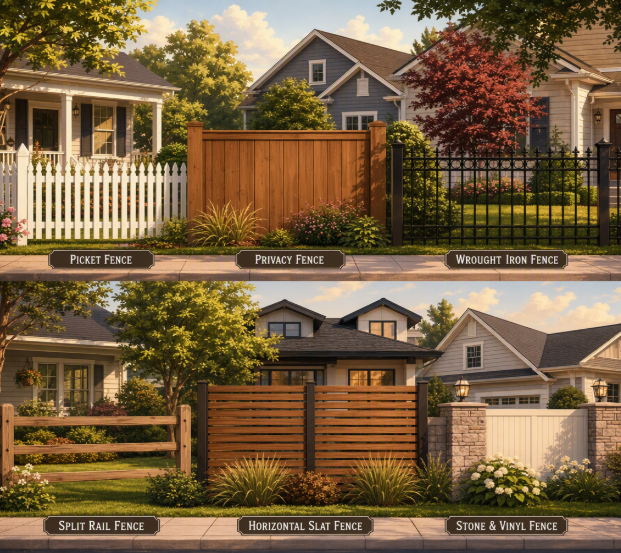
A fence is a barrier made from wood, vinyl, composite, wire, or metal that encloses or marks part of a property. The main types used for homes and yards include privacy, security, boundary, decorative, and safety fences.
Your best type of fence depends on what matters most to you. Do you want complete privacy, strong durability, or more visual appeal? In Southeast Michigan, many homeowners turn to Evelyn Fence Company for help matching style, function, and local needs before fence installation begins.
1. Privacy Fences
A privacy fence is built to block views into your yard. This type works well when you want seclusion around patios, pools, or backyard spaces. Most privacy fence designs are at least 6 feet tall and use solid boards or panels with few or no gaps.
Wood and vinyl privacy fences are the most common choices. Wood offers a natural look and can be customized. Vinyl privacy fences need less upkeep and do not rot or splinter, though they still need cleaning to prevent stains from algae, mold, and mildew.
Good privacy options include:
Solid wood panels for complete privacy and a traditional appearance
Vinyl privacy fences for low maintenance and a clean finish
Shadowbox fences if you want some airflow with less than complete privacy
2. Security Fences
Security fences focus on protection first. They help control access, contain pets, and create a clear barrier around a yard or business. Unlike privacy fences, they often keep visibility open so you can see through them.
Chain link fencing is one of the most common security choices because it is durable, affordable, and low maintenance. Iron fences and other metal fencing options also provide strong security with a more formal look. Some metals can face rust in certain climates, while aluminum avoids corrosion and is easier to maintain.
Popular security-focused styles include:
Chain link fencing for practical protection on a budget
Iron fences for a classic and stronger-looking barrier
Aluminum and steel designs for a sophisticated look with open visibility
3. Boundary Fences
Sometimes, a fence is not mainly about privacy or security. A boundary fence is often used to mark property lines and show where one yard ends and another begins. This can reduce confusion and help organize outdoor space.
A split rail fence is a common boundary option, especially on larger properties. It has an open, rustic look and usually uses two or three horizontal rails. It does not offer much privacy, but it is budget-friendly and simple. Before you install one, check your survey and any homeowners association rules.
Key things to review include:
Exact property lines before digging or setting posts
Local rules or homeowners' association limits on height and style
Whether the fence is for marking space, discouraging trespassing, or both
4. Decorative Fences
Decorative fences are chosen mostly for visual appeal. They frame front yards, gardens, and walkways while keeping the space open and welcoming. These fences can still mark a border, but their main job is to support the look of the property.
A picket fence is one of the most recognized decorative styles. It offers charm and a traditional appearance, especially around front yards. Lattice fences are also popular because they add texture and can support vines. Both styles boost curb appeal, though neither provides much privacy or strong security.
Common decorative choices include:
Picket fence designs in wood or vinyl
Lattice sections for gardens and plant support
Ornamental details such as caps, spacing patterns, or finials
5. Pool and Garden Fences
Pool and garden fences are built with safety and function in mind. Around a pool, the goal is to reduce risk and limit unsupervised access. In a garden, the goal is often to protect plants from animals while keeping the area neat and usable.
Aluminum is a popular pool fence material because it resists rust and keeps visibility open. For gardens, wire mesh is often used because it is inexpensive, durable, and useful for plant support. Some wire designs can even create a modern look when paired with clean posts and straight lines.
Before choosing one, think about:
Safety needs around a pool or hot tub
Whether visibility matters for supervision
If your garden fence should block pests, support vines, or both
Main Fence Materials and Their Pros & Cons
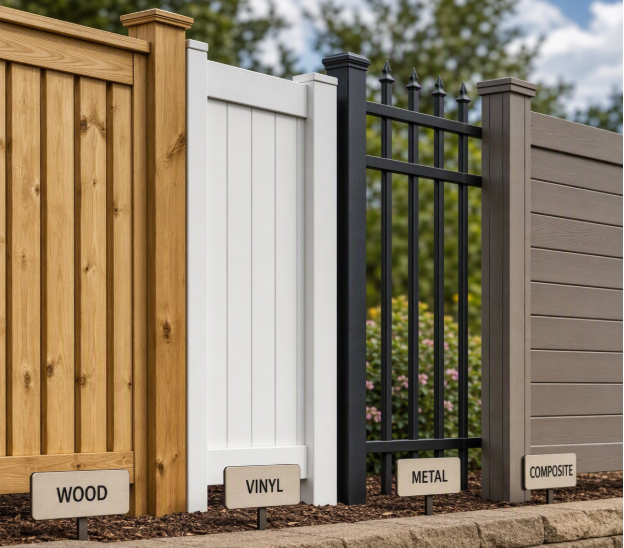
Fence materials affect cost, looks, upkeep, and durability. The most common choices for residential fencing are wood fencing, vinyl fencing, composite fencing, chain link, and other metal fencing such as aluminum, steel, or iron.
Each material has trade-offs. Wood feels warm and classic but needs more care. Vinyl is low maintenance but can cost more up front. Metal fencing offers strength and visibility, while composite can be an eco-friendly choice made with wood fibers and plastic. The next sections break these options down.
Vinyl Fencing: Low Maintenance Choices
Vinyl fencing is a strong choice if you want a clean look without constant upkeep. A vinyl fence does not splinter, rot, or suffer insect damage. That makes it attractive for busy homeowners who want long-term value and low maintenance.
It is available in privacy, picket, and ranch-style designs. Some homeowners like its crisp, modern look, while others prefer the texture of natural wood. Vinyl can cost more at the start, but the reduced maintenance often balances that over time.
Key pros and cons include the following:
Low maintenance with no painting or staining
Simple cleaning with soap and water
Higher upfront cost and possible surface staining if not cleaned
Aluminum and Metal Fencing for Durability
For long-term durability, many homeowners look at aluminum fencing and other metal options. These fences hold up well outdoors and are often used around pools, driveways, and front yards where visibility matters.
Aluminum fencing is lightweight, low maintenance, and does not develop rust. Iron fences offer a more formal and heavy-duty look, but they can be more expensive and may need more care in climates where rust is a concern. Steel sits between chain-link and wrought iron in price and appearance.
These materials are often chosen for:
A sophisticated look without blocking views
Strong durability in outdoor conditions
Security and definition with less upkeep than wood
Chain Link Fencing: Versatile and Affordable Solutions
Chain link fencing is one of the most versatile and affordable fence options. It uses woven wire mesh stretched between metal posts to create a tough barrier. This makes it useful for backyards, side yards, pet areas, and larger spaces.
Its biggest strength is value. It is durable, low maintenance, and works well when you need containment more than style. The main drawback is the lack of privacy. Some people add slats or plants to soften the look, but the open design will always remain more visible than solid panels.
Why many property owners choose it:
Affordable for large areas
Durable and practical for everyday use
Fast, simple solution when privacy is not the main goal
Composite and Eco-Friendly Fence Materials
Composite fencing blends recycled plastic with wood fibers to create boards that look more like wood than plain plastic. This makes it a useful choice for homeowners who want the warmth of wood without the same level of maintenance.
Because composite resists insects, weather, and temperature swings, it can be a smart fit for modern homes and busy households. It is also often described as eco-friendly because it uses reclaimed materials. Still, quality can vary, and some products may fade over time.
Composite fencing is often chosen for:
Eco-friendly goals and reduced waste
Low maintenance compared with wood fencing
A wood-like appearance that suits modern homes
Key Components of a Fence Explained
Every fence has a basic structure, even though fence styles can look very different. The main parts usually include posts, rails, panels or pickets, and gates. These parts work together to create strength, shape, and function.
When you understand the anatomy of a fence, it becomes easier to compare designs and materials. For example, pickets change the look, posts provide support, rails connect sections, and gates control entry. Here is a simple breakdown of those key pieces.
Fence Panels and Pickets
Fence panels and pickets are the parts most people notice first. They create the visible face of the fence and have a big effect on privacy, spacing, and overall style. In some systems, solid panels are installed as one section. In others, individual pickets or slats are attached piece by piece.
Pickets are common on decorative and traditional fences. Their spacing can be adjusted to change the look and function. Solid fence panels are more common on privacy designs because they limit gaps and create a stronger screen.
These pieces influence:
How open or closed the fence feels
The level of visual interest from the street or yard
Whether the fence has a traditional appearance or a more modern layout
Fence Posts and Rails
Fence posts are the main support system. They are set into the ground and hold the fence upright over time. Without strong fence posts, even high-quality panels or pickets will fail. That is why proper placement and depth matter so much.
Rails run horizontally between the posts. They connect the structure and support the fence face. On many fences, the rails stay mostly hidden, but they do a large share of the work. Posts are often secured with concrete footings to improve stability and durability.
Important structural points include:
Posts carry the load of the whole fence
Rails tie sections together and support pickets or panels
Concrete footings help resist shifting and movement
Gates and Hardware Essentials
A fence is not complete without gates and hardware. Gates create access points for people, pets, tools, or vehicles. They need to fit the fence style while also opening and closing smoothly every day.
The small parts matter more than many homeowners expect. Hardware includes hinges, latches, brackets, and fasteners. Decorative accents such as finials may also be added to improve style. If the hardware is weak or poorly matched, the gate can sag or wear out faster than the rest of the fence.
Before installing gates, consider:
How wide the opening needs to be
The strength of hinges, latches, and fasteners
Whether you want simple function, decorative detail, or both
Conclusion
In conclusion, a fence serves multiple purposes, from providing security and privacy to enhancing the aesthetic appeal of your property. Understanding the various types of fences and their components is essential in making an informed choice that meets your needs. At Evelyn Fence Company, we are committed to helping you navigate these options with ease, offering an array of materials and styles tailored to your preferences. With our extensive experience as a family-owned business since 1927, you can trust that we will handle your fencing project with care and professionalism. For a comprehensive consultation, feel free to reach out for your free quote today!
Frequently Asked Questions
What type of fence is best for my property?
The right fence depends on your specific needs. If you want privacy, choose solid panels. If you want lower cost, chain-link may work better. Decorative fence styles suit front yards, while stronger materials can improve security. The best choice balances function, budget, upkeep, and your home’s value.
How long does a fence installation take in Michigan?
Fence installation time depends on size, terrain, weather, and material. Wood fencing, vinyl fencing, and metal fencing can vary by project. Property lines and approvals also affect the schedule. Evelyn Fence Company notes that many installations are completed in 1–3 days once planning and site preparation are finished.
Do I need a permit to install a fence in Michigan?
You may need a permit for fence installation, depending on fence height, placement, and your local rules. A homeowners association may also have design limits. Before choosing a type of fence, confirm property lines and check municipal requirements. Evelyn Fence Company can help guide approvals as part of the planning process.
