
Fence Anatomy: Every Part of a Fence Explained for You
Key Highlights
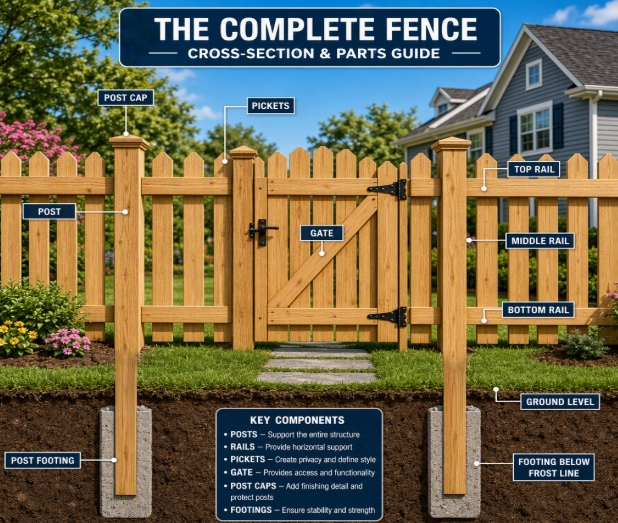
Fence anatomy includes fence posts, rails, pickets or panels, gates, and finishing pieces.
Fence posts carry the main weight of the fence and support long-term fence installation strength.
Rails connect posts and hold boards in place, shaping both structure and fence style.
Pickets, wooden boards, and fence panels control privacy fence coverage, security, and visual appeal.
Post caps, kickboards, trim, and lattice add better protection and a more finished look.
Material choices in wood fence, vinyl, and aluminum affect how each part performs.
Introduction
Fence anatomy is the name for all the individual parts that make up a fence and help it work as one system. It includes posts, rails, pickets, gates, hardware, and protective finishing pieces. If you understand fence anatomy, fence installation becomes easier to plan, and wooden fences make more sense from both a strength and design point of view. Once you know what each piece does, you can make smarter choices for durability, upkeep, and the look of your yard.
Why Understanding Fence Anatomy Is Important
A fence is not just a row of boards. The parts of a wooden fence work together to create support, privacy, and a clean boundary line. When you know what each piece does, it becomes easier to choose the right fence style for your property.
That knowledge also helps protect structural integrity. You can spot weak areas, understand why certain parts matter, and avoid design choices that hurt performance. The next sections break down how each part affects strength, appearance, and long-term function.
The Roles of Fence Parts in Strength and Longevity
Start with fence posts. They support the main weight of the fence and anchor the whole structure into the ground. During fence installation, posts are set in holes and often placed in concrete so the fence’s stability lasts through changing weather conditions.
Next come rails, also called backer rails or fence stringers. These horizontal pieces tie the posts together and give pickets or panels a place to attach. Without solid rails, the fence can loosen, lean, or lose shape over time.
Then there are pickets, boards, gates, and finishing parts. Pickets form the visible barrier. Gates create access. Caps, kickboards, and trim add better protection where moisture, wind, and wear usually cause damage first. Together, these parts support structural integrity and help a fence stay strong for years.
How Proper Fence Anatomy Impacts Fence Appearance and Function
Good fence anatomy does more than hold boards upright. It shapes the fence’s look from top to bottom. The spacing of pickets, the style of the top edge, and the use of trim or caps all affect aesthetic appeal and curb appeal.
For a privacy fence, pickets placed tightly side by side block views into your yard. In a shadowbox fence, small gaps allow light through while still giving some screening. That means the same fence part can change both privacy and style.
Small details matter too. A cap board can create a more finished look. Trim can hide fasteners for a cleaner face. Decorative tops can soften a plain layout. When each component is chosen well, you get a fence that works properly and looks complete.
Fence Posts – The Backbone of Every Fence
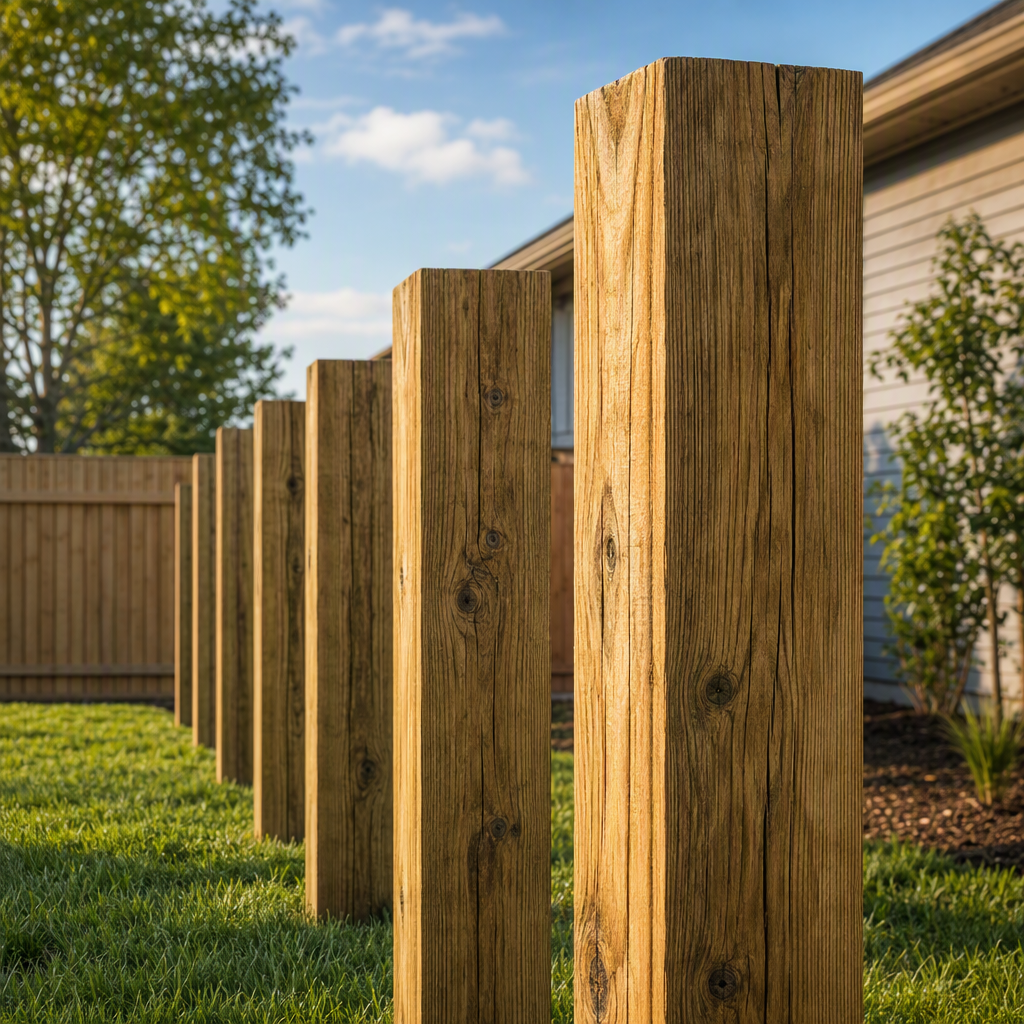
Fence posts are the backbone of any fence because they carry the load of every other section. Rails, panels, and gates all depend on properly placed main fence posts to stay straight and secure.
In fence installation, posts are usually set into the ground in dug holes with concrete added for support. Their size and height depend on the height of the fence. If posts are weak or set poorly, structural integrity suffers. That makes the different post types worth understanding first.
Types of Fence Posts: Line, Corner, End, and Gate Posts
Not every fence post does the same job. Main fence posts are placed based on the layout of the fence and the direction each section needs to travel. Their shared role is simple: support the structure and hold the fence in place.
Here are the common types:
Line posts sit between sections and support straight runs of fence.
Corner posts anchor turns in the layout and handle stress from two directions.
End posts finish a run, while gate posts support the weight and movement of the gate.
Gate posts usually need the most support because gates swing, pull, and carry hardware. Corner posts also work harder than standard line posts. When each post type is used in the right place, the whole fence has a better chance of staying stable and lasting longer.
How Fence Posts Support Structure and Stability
Fence posts carry the main weight of the fence. That includes the rails, pickets, panels, and gates attached between them. If the posts move, every connected part can shift with them.
Proper fence installation is what gives posts their strength. Holes are bored into the ground, concrete is added, and the posts are set at a depth that fits the topography of the area. Those first steps are what protect stability over time.
Once posts are secure, the rest of the fence can do its job. Rails stay level. Pickets stay aligned. Gates open and close more smoothly. Strong posts are the base of structural integrity, which is why they are often the first thing fencing experts check when a fence starts leaning or failing.
Fence Rails and Their Essential Functions
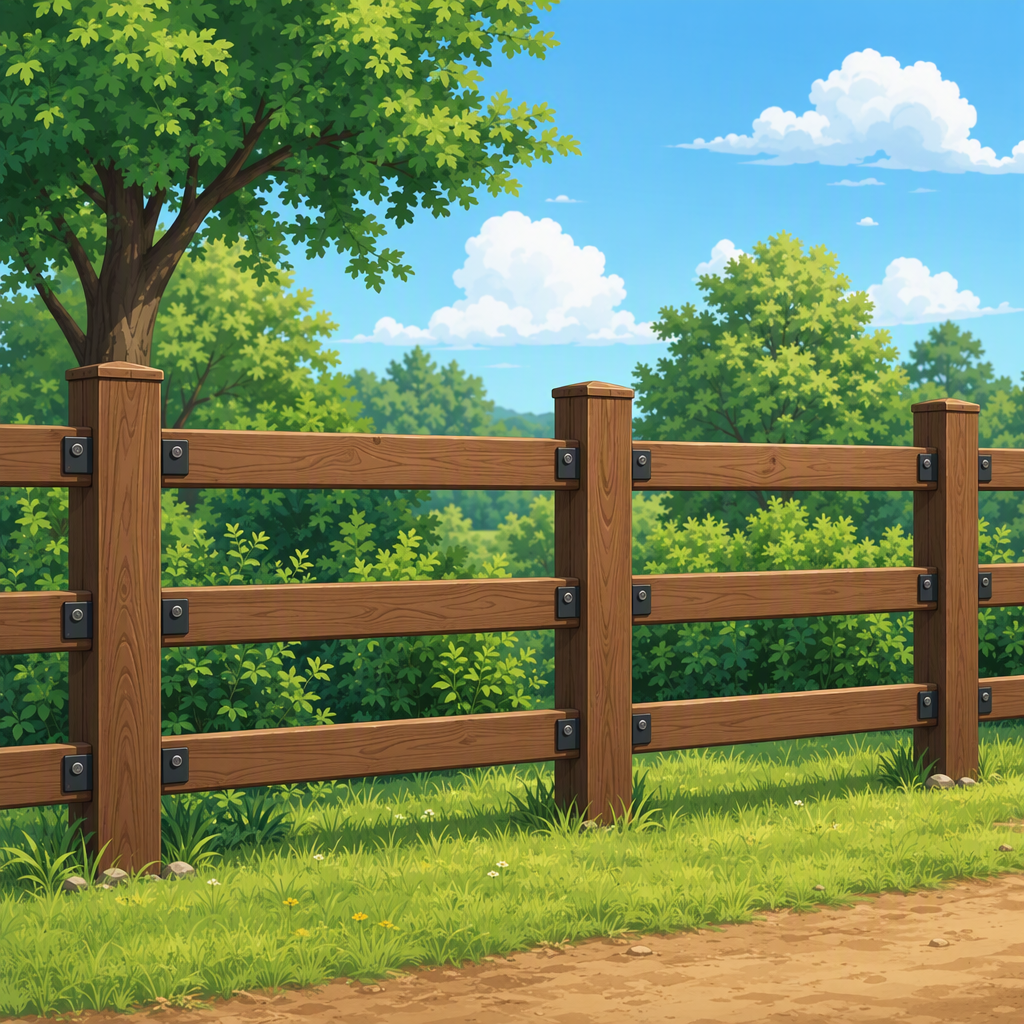
Fence rails run horizontally along the length of the fence and connect one post to the next. In many wood fence designs, they are the support pieces that hold pickets in place. You may also hear them called backer rails.
The number of rails depends on the type and height of the fence. Some layouts use two, while taller sections may use three. From the top rail to the bottom rail, each one plays a slightly different role. That is why it helps to look at them one by one.
Top Rail, Bottom Rail, and Mid Rail Differences
Fence rails are important because they give the fence its internal frame. They tie posts together and provide the surface where pickets or panels are fastened. The type of fence and its height help determine the number of rails needed.
Each rail position serves a purpose:
Top rail helps hold the upper part of the fence together and supports alignment.
Bottom rail supports the lower section and helps keep boards steady.
A mid rail adds extra support in taller fences or where more rigidity is needed.
In some designs, two rails are enough, while others benefit from three.
Without rails, the fence would not have a dependable structure between posts. They help prevent bowing, improve attachment strength, and keep the fence looking even across its full run. In short, rails are a key part of both strength and shape.
What is a fence stringer and its purpose?
A fence stringer is another name for a fence rail or backer rail. It is a horizontal piece of wood that runs between fence posts and supports the boards or pickets attached to the face of the fence.
During fence installation, fence stringers are placed at set positions along the height of the section. Depending on the design, there may be two or three. Their job is to spread weight across the panel instead of forcing the pickets to carry it alone.
This matters because pickets are the visible layer, not the main support frame. Stringers create that hidden frame. In many wood fencing layouts, they are made with 2x lumber for thickness, and their length matches the space between posts. If a stringer weakens, the whole section can feel loose.
Pickets, Boards, and Panels – The Face of Your Fence
When most people picture a fence, they picture the pickets or wooden boards first. These are the visible parts that define the style of the fence, whether you want a classic picket fence, a solid privacy fence, or prebuilt fence panels.
They also shape how much coverage you get. Tight board placement creates more privacy, while open spacing allows visibility and airflow. Because these pieces are the face of your fence, their size, spacing, and top shape all affect both performance and appearance.
How Fence Pickets Create Privacy, Security, and Style
Fence pickets, also called slats or boards, are the vertical boards attached to the rails. They create the barrier people see from the street or yard. In a privacy fence, these boards are placed tightly together to block views and create a more enclosed space.
Pickets also influence design:
The most common industry picket size is 42 inches or 72 inches tall and 5/8 inch thick.
Top styles can include dog-ear, flat-top, or horizontal looks.
Thickness can range from more economical 1/2 inch to sturdier 3/4 inch options.
Spacing changes function. Boards set side by side create strong privacy and a more solid feel. A shadowbox fence leaves small gaps, which balances sunlight and privacy. That means one fence picket can support security, style, and aesthetic appeal all at once, depending on how it is used.
Other Key Components of Fence Anatomy
The main components of a fence are posts, rails, and boards, but several other pieces complete the system. These added parts can improve protection, boost appearance, and give the fence additional strength where it needs it most.
You will often see features like caps, kickboards, trim, and decorative tops on custom projects. While some are visual details, many also serve practical purposes. Understanding these components of a fence helps you see why a well-built fence feels more complete from every angle.
Post Caps, Kickboards, Lattice, Trim, and Decorative Features
Finishing pieces can protect the fence while improving the final design. On wood fencing, these parts often solve small wear issues at the top or bottom of the structure. They also help match the fence to the home and create a cleaner outline.
Common examples include:
Post caps are placed on top of the posts to protect exposed wood and add style, such as flat post cap or dome designs.
A kickboard, also called a mud board, at the base to keep boards away from ground moisture.
Cap board running flat across the top of the pickets for protection and a more polished edge.
Trim that hides fasteners and gives panels a more finished look.
Decorative features can also include lattice or other top details that soften the fence line. Some post caps go beyond simple shapes and include final touches like flower buds, filigree, or acorn-inspired designs. These details add curb appeal without changing the main structure.
Concrete Footings and Their Importance for Fence Installation
Concrete footings matter because they help hold fence posts firmly in place. In fence installation, holes are bored into the ground, concrete is added, and the posts are set into that base. This gives the fence a stronger start.
The needed depth depends on the topography of the area. That is important because soil and grade affect how well posts resist movement. If the base is not secure, the fence can lean, loosen, or lose alignment over time.
Concrete footings support fence stability for years to come. They are especially useful when the goal is long-term performance instead of a short-term fix. Along with kickboards and cap boards that offer better protection above ground, footings handle the hidden support below ground.
Gate Hardware and Fence Gates Explained
Fence gates do more than create an opening. They provide secure access to your fenced yard and should match the rest of the fence in both size and style. A well-built gate needs strong support and the right gate hardware.
That includes hinges and latches that allow smooth movement and reliable closure. Since gates are used often, they face more wear than standard sections. For a long-lasting gate, every part has to work together. The next sections explain how gate options and hardware fit into overall fence performance.
Fence Gate Options and How Hardware Like Hinges and Latches Work Together
Fence gates can be added to almost any layout, whether you need one access point or several for a large yard. The gate is usually customized to match the fence style so it looks like part of the same design, not an afterthought.
The hardware does the work:
Hinges attach the gate to the gate post and allow it to swing open and closed.
Latches keep the gate shut for privacy and security.
Using three hinges is often recommended for a more durable, long-lasting gate.
Good hardware supports daily use. A gate may look like a simple fence panel, but it moves and carries stress in a different way. That is why the post, frame, hinges, and latch all need to work as one system to keep the gate aligned and dependable.
The Role of Gates in Overall Fence Functionality
Fence gates connect convenience with security. They let you enter and leave the yard without going through the house, which is useful for families, pets, and day-to-day movement around the property.
At the same time, gates need to match the rest of the fence. The number of rails, the picket style, and the height should line up with nearby sections so the look of your fence stays consistent. A mismatched gate can stand out in the wrong way.
Function matters just as much as appearance. A long-lasting gate should open smoothly, close securely, and hold its shape with repeated use. When the gate is built to match the structure around it, it becomes a working part of the fence instead of a weak point.
Comparing Fence Anatomy by Material: Wood vs Vinyl vs Aluminum
Fence anatomy stays similar across many materials because every fence still needs support, connection points, and visible sections. You still have posts, rails, panels or pickets, gates, and hardware. What changes is how those parts are made and finished.
A wood fence often shows the parts of a wooden fence more clearly, especially boards, rails, trim, and cap pieces. Vinyl and aluminum use the same basic layout, but the details can look cleaner or more streamlined. A quick comparison makes those differences easier to understand.
Key Differences in Fence Anatomy Across Popular Materials
Material affects how visible each fence part is and how much decorative finishing is common. In a wood fence, you often notice rails, boards, trim, cap boards, and kickboards. With vinyl or aluminum, the structure may look simpler even though the same basic anatomy is still there.
Here is a simple comparison:
Wood fence:
Posts, rails, and boards are easy to identify. Decorative pieces like cap board, trim, and kickboard are common. Type of wood affects look and thickness.
Vinyl:
Similar layout with posts, rails, and panels, but the surface looks more uniform and less like separate wooden boards.
Aluminum:
Uses posts, rails, panels, and gates in a lighter-looking form, often with a more open style.
Compared with a chain-link fence, all three of these materials usually create a more defined finished look. Wood shows the most part-by-part detail, while vinyl and aluminum often appear more integrated.
What to Consider When Choosing Materials for Your Fence
The right material depends on what you want your fence to do and how you want it to look. Some homeowners focus on privacy. Others care most about appearance, access, or matching the home. Your type of fence should fit those goals.
A few practical things to weigh:
Climate and harsh weather conditions, since wind and moisture affect how parts perform.
Whether you want the natural detail of wood fencing or a cleaner, simpler surface.
How important decorative finishing pieces are to your preferred finished look.
If you choose wood, the type of wood fence matters because it influences style, board thickness, and the visual character of the fence. If you prefer a more streamlined appearance, vinyl or aluminum may suit you better. The best choice is the one that fits both your property and your priorities.
Conclusion
In conclusion, understanding the anatomy of a fence can significantly enhance your awareness of its structure, durability, and overall appeal. Each component, from the posts and rails to the pickets and gate hardware, plays a critical role in ensuring that your fence not only stands strong but also meets your aesthetic preferences. By grasping how these parts work together, you can make informed decisions when selecting materials and planning your fence installation. If you're ready to explore your fencing options or need a personalized estimate, don’t hesitate to contact Evelyn Fence Company. Our family-owned business is here to guide you every step of the way!
Frequently Asked Questions
What are the main parts of a fence called?
The main parts of a fence are fence posts, fence rails, and pickets or panels. Many fences also include gates, post caps, trim, kickboards, and hardware. Together, these pieces create the structure, surface, and access points that make the fence functional.
How deep should fence posts be set?
Fence posts should be set to a depth that fits the topography of the site and supports structural integrity. In fence installation, posts are placed in dug holes with concrete footings for strength. The right depth helps the fence stay stable and resist movement over time.
What does a kickboard do on a fence?
A kickboard, also called a mud board, runs along the base of the fence. It keeps pickets and posts away from ground moisture, which helps reduce decay. It also improves the finished look and can add additional strength and protection at the bottom edge.
